Best Buy

Improving retention and opt-in rate with onboarding
Industry
Retail
Team
PM Intern
SWE Intern
Project Advisor
Role
UX/UI Design Intern
Timeline
12 weeks, 2020

Results of modified concept A/B tesT
7.3%↑
78%↓
Context
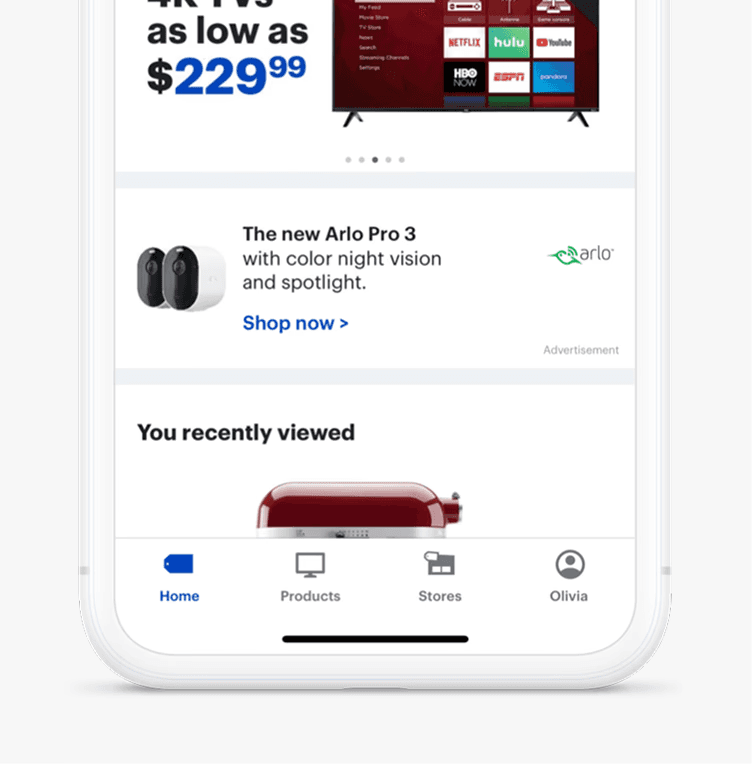
The Best Buy retail app has 3 million monthly active users who research and purchase products, track orders, manage rewards accounts and more.
When users are signed-in, the app supports a personalized shopping experience curated to their preferred store, order history, and preferences.

Problem
26% less users sign-in on first-time visits compared to returning visits.
Currently, the app does not guide new users through sign-in or preference configuration upon download. As a result, 26% less users sign-in on first-time visits compared to returning visits; an opportunity to strategically communicate with first-time users is missed.
PRELIMINARY research
Almost twice as many users take steps to customize the app on returning visits compared to first time downloads.
Signing in, enabling location, and creating an account happens much more often on returning visits. A deep dive into qualitative OpinionLab surveys and NPS feedback revealed a mismatch in user expectations for app set up.
💬
"How do I log in?? I have spent over $2,000 in your store and have no records of my purchases or rewards points."
💬
"The app will ask for notification but there is no way to tell what it will notify me about."

product hypothesis
Could a more contextual onboarding facilitate adoption and improve retention over time?
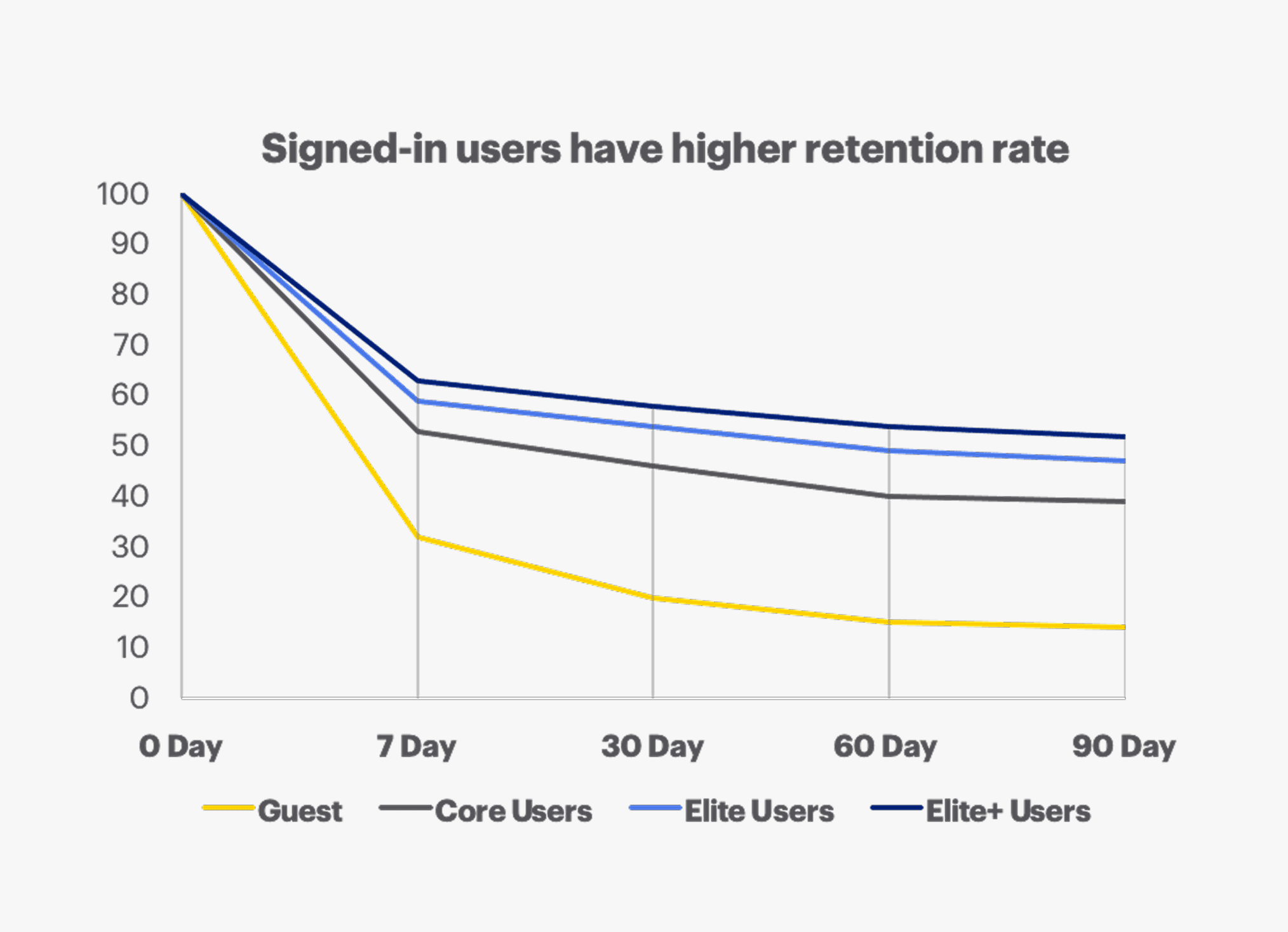
Signed-in users have consistently higher retention rate. We hypothesized that better enabling first time set up could improve relevance and app value that keeps more customers returning over time.
OPPORTUNITIES
1
Streamline and clarify app set up process
2
Strategically communicate value propositions of opt-in features to improve relevance
3
Leverage the business opportunity to caputure better customer data and promote adoption
cOMPETTIVE RESEARCH
Competitors use personalization and permission priming to guide first time users
I reviewed onboarding and personalization patterns across analogous retail competitors to identify opportunities for a more tailored first-time experience. Interest-based personalization to customize the homepage, introducing new features, and priming users before permission requests were common themes.

IDEATION
What is most important to communicate to Best Buy customers upon download?
I generated a breadth of low-fidelity concepts to explore directions and align on priorities and preliminary requirments with the product team.
Business requirements
Sign in
Location enablement
Set your store
Notification permissions
Experience principles
Contextualize opt-in
Ensure gating is non restrictive
Keep it engaging and light


Usability evaluation
Testing revealed users needed clearer, more flexible guidance
I facilitated a usability study with 15 shopping app users and identified three friction areas.
1
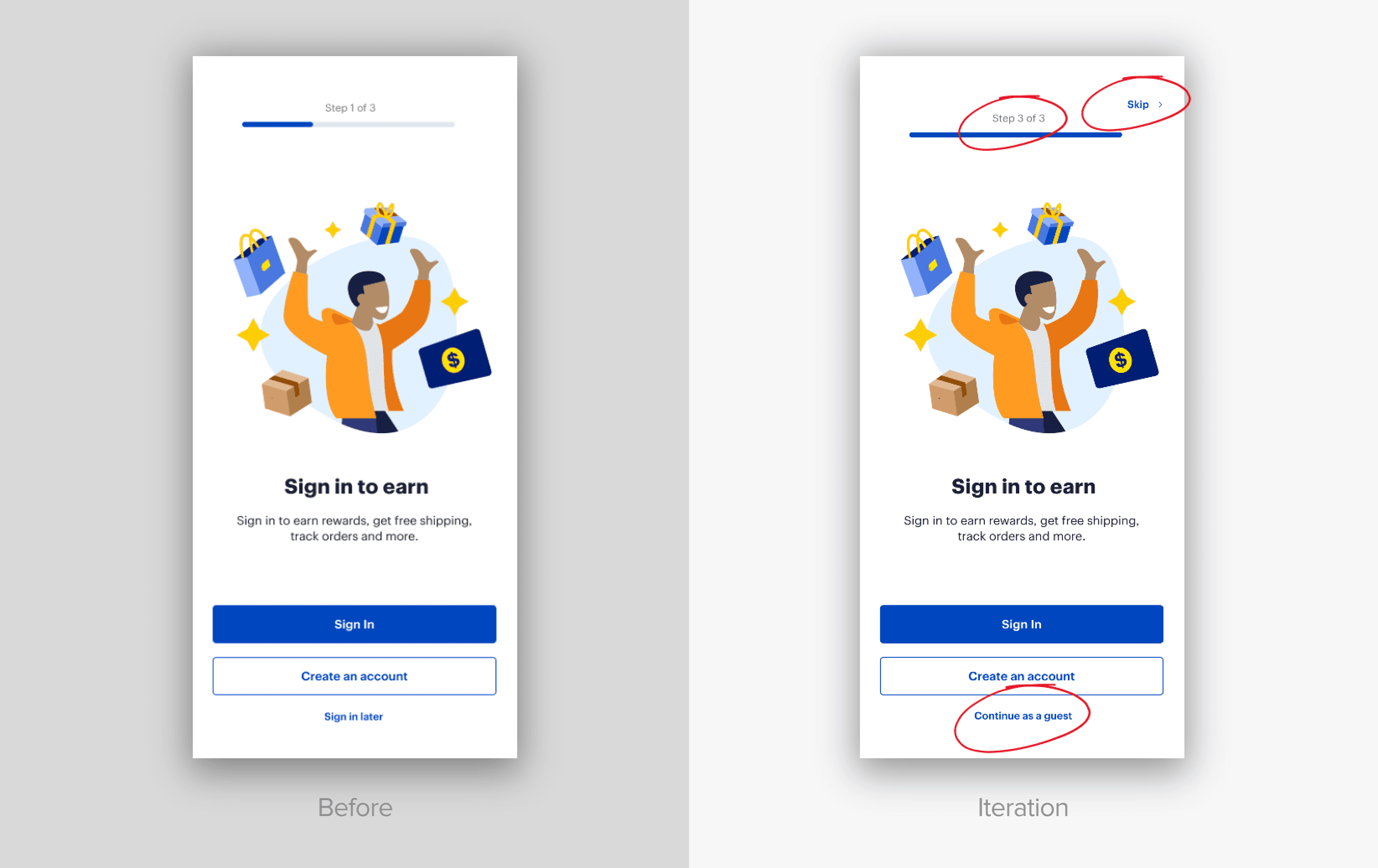
Users were uncertain whether signing in was required to complete onboarding.
2
“Not now” was interpreted as skipping the entire onboarding flow, not just the step.
3
“Sign in later” felt limiting and reduced users’ sense of flexibility or control.
💬
"In order to get to the second step I had to sign in, I felt like that flow didn't feel fluid."

FINAL DESIGN
A welcoming first-time experience that sets the stage for personalized shopping
The final design direction incorporated the key high value actions from the business requirements while remaining playful, lightweight and contextual.
modified concept A/B tesT results
7.3%↑
78%↓
Due to the project’s scale and stakeholder concerns around risk, the experience was adapted into a minimum viable product and broken into notification, sign-in, and location components for separate A/B testing. The experiment reached success and the expanded onboarding experience has been rolled out post my depature from the team.

Reflection
Working with illustrators
A super fun component of this project was working with our illustrators (shoutout Caleb Hou!) to communicate brand and value through graphics.
Balancing business and experience objectives
A tension to navigate in this project was making tradeoffs between user and busienss goals. It was crucial to have effective collaboration with product partners to find the right balance.
Designing for a broad scope of users
The first time experience needed to fit all our customer archetypes, regardless of if they were one time shoppers or power users. Usability testing across our segments was vital for evaluating this criteria.


